 By admin
 Unveiling Insights: The Power of Map Visualization
Related Articles: Unveiling Insights: The Power of Map Visualization
Introduction
In this auspicious occasion, we are delighted to delve into the intriguing topic related to Unveiling Insights: The Power of Map Visualization. Let’s weave interesting information and offer fresh perspectives to the readers.
Table of Content
Unveiling Insights: The Power of Map Visualization
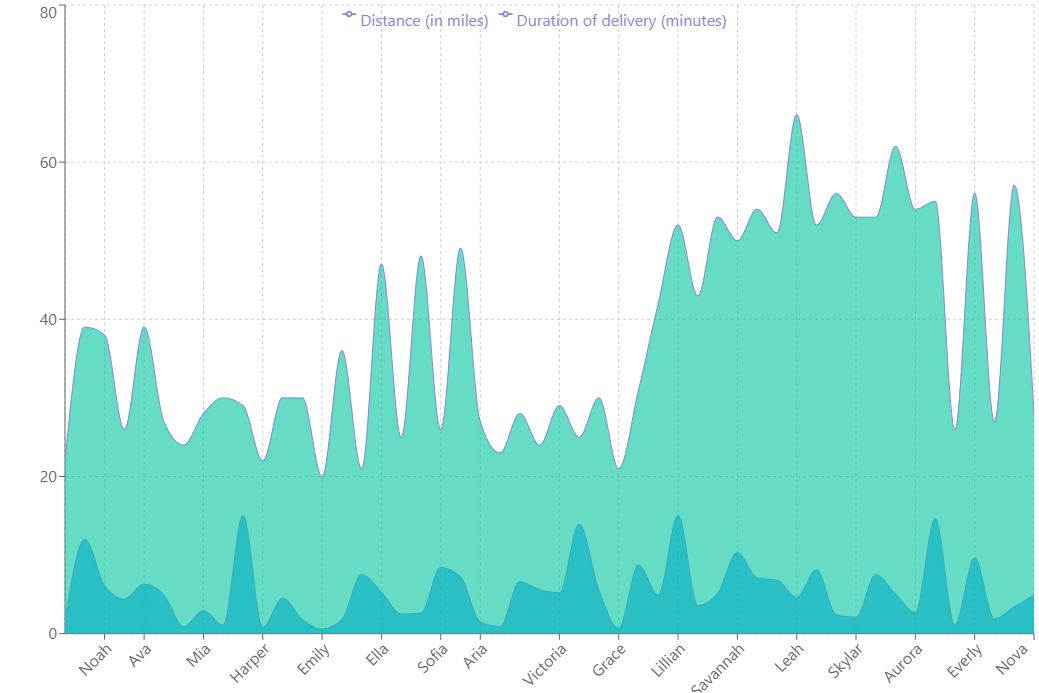
In an increasingly data-driven world, the ability to effectively communicate complex information is paramount. While tables and charts offer valuable insights, map visualization emerges as a powerful tool, transforming data into compelling, geographically-grounded narratives.
Understanding Map Visualization
At its core, map visualization involves using maps to represent and analyze data, revealing spatial patterns, relationships, and trends. This process goes beyond simple geographical representation; it leverages the inherent human understanding of space to uncover hidden stories within data.
The Power of Spatial Representation
Maps offer a unique advantage in data visualization. They tap into our innate spatial reasoning abilities, allowing us to effortlessly grasp:
- Location: Maps provide a clear and intuitive understanding of where data points are situated, enabling us to identify clusters, outliers, and spatial relationships.
- Distribution: By mapping data, we can visualize the distribution of phenomena across geographical areas, revealing patterns and trends that might remain hidden in tabular formats.
- Relationships: Maps facilitate the exploration of relationships between data points and their spatial context, allowing us to identify correlations and causal connections.
- Change Over Time: Animated maps or time-series visualizations effectively illustrate how data evolves over time, providing a dynamic perspective on trends and shifts.
Applications of Map Visualization
The applications of map visualization are vast and diverse, spanning across numerous fields:
- Business Intelligence: Businesses can leverage map visualization to understand customer demographics, market trends, and supply chain logistics, informing strategic decision-making.
- Public Health: Mapping disease outbreaks, healthcare access, and population demographics assists in developing effective public health interventions and resource allocation.
- Environmental Science: Visualizing climate change impacts, deforestation patterns, and pollution levels helps in raising awareness, informing policy, and driving sustainable practices.
- Urban Planning: Mapping population density, infrastructure, and transportation networks assists in urban planning, promoting efficient resource allocation and sustainable development.
- Social Sciences: Researchers utilize map visualization to study migration patterns, social inequalities, and the impact of political events, leading to deeper understanding of social dynamics.
Beyond Static Maps: Interactive and Dynamic Visualization
The evolution of map visualization has extended beyond static maps to encompass interactive and dynamic approaches, further enhancing data exploration and communication:
- Interactive Maps: Users can zoom, pan, and filter data on interactive maps, providing granular control over the information displayed and enabling personalized exploration.
- Geolocation-Based Data: Integrating real-time location data, such as GPS coordinates, allows for dynamic map visualizations that reflect real-world situations and events.
- 3D Maps: Creating immersive 3D representations of data adds depth and perspective, enhancing the visual impact and understanding of complex spatial relationships.
Choosing the Right Map Visualization Technique
Selecting the appropriate map visualization technique depends on the specific data and the desired message. Commonly used techniques include:
- Choropleth Maps: Use color variations to represent data values across geographical areas, highlighting regional differences and patterns.
- Dot Density Maps: Use dots to represent the concentration of data points, providing a visual representation of density and distribution.
- Heatmaps: Use color gradients to depict the intensity of data values, revealing areas of high or low concentration.
- Flow Maps: Use lines or arrows to illustrate movement or flow of data, visualizing transportation networks, migration patterns, or resource flows.
- Symbol Maps: Use symbols to represent specific data points or locations, providing a clear visual distinction for different categories or attributes.
FAQs on Map Visualization
1. What software is used for map visualization?
Numerous software tools support map visualization, ranging from open-source options like QGIS and Leaflet to commercial platforms like ArcGIS and Tableau. The choice depends on the specific requirements, data complexity, and user expertise.
2. What are the challenges in map visualization?
Challenges in map visualization include:
- Data Quality: Ensuring accurate and reliable data is crucial for effective map visualization.
- Visual Clarity: Choosing appropriate color schemes, symbols, and map projections is essential for clear and understandable visualizations.
- Data Privacy: Protecting sensitive location data and ensuring responsible use of map visualizations is vital.
3. How can I improve my map visualization skills?
Developing strong map visualization skills involves:
- Understanding Data: Thoroughly analyzing and understanding the data is the first step towards effective visualization.
- Choosing the Right Technique: Selecting the most appropriate map visualization technique for the specific data and message is critical.
- Visual Design Principles: Adhering to principles of visual design, such as color contrast, typography, and map layout, enhances readability and impact.
Tips for Effective Map Visualization
- Start with a Clear Objective: Define the key message you want to communicate through the map visualization.
- Choose the Right Map Type: Select the map type that best suits the data and the intended message.
- Simplify Complexity: Focus on the most important information and avoid overwhelming the viewer with excessive data.
- Use Color Strategically: Employ color schemes that are both visually appealing and effectively convey data differences.
- Provide Context: Include labels, legends, and supporting information to provide context and facilitate understanding.
- Test and Iterate: Continuously refine and improve your map visualizations based on feedback and user testing.
Conclusion
Map visualization transcends mere data representation; it empowers us to uncover hidden patterns, communicate complex insights, and inform decision-making. By harnessing the power of spatial reasoning and engaging with data in a visually compelling manner, map visualization serves as a powerful tool for unlocking the stories within our data and driving meaningful change. As technology continues to evolve, we can expect even more innovative and impactful map visualization techniques to emerge, further shaping our understanding of the world around us.





Closure
Thus, we hope this article has provided valuable insights into Unveiling Insights: The Power of Map Visualization. We hope you find this article informative and beneficial. See you in our next article!